MATH AS LANGUAGE
Where Math Becomes a Language
Cognitive Power • Cultural Pride • Brooklyn Boldness
Mathematics has grammar, structure, and voice — just like writing. At The Bien-Aimé Institute, students learn to read, write, and speak math with clarity and precision. They don’t memorize steps. They build fluency, vocabulary, and reasoning — developing the confidence to explain why an answer is true.
Here, students learn to:
- Decode symbols as vocabulary
- Build complete mathematical sentences
- Justify reasoning with clear academic language
- Recognize patterns and structure
- Speak math with confidence and precision
Math becomes communication — not intimidation.
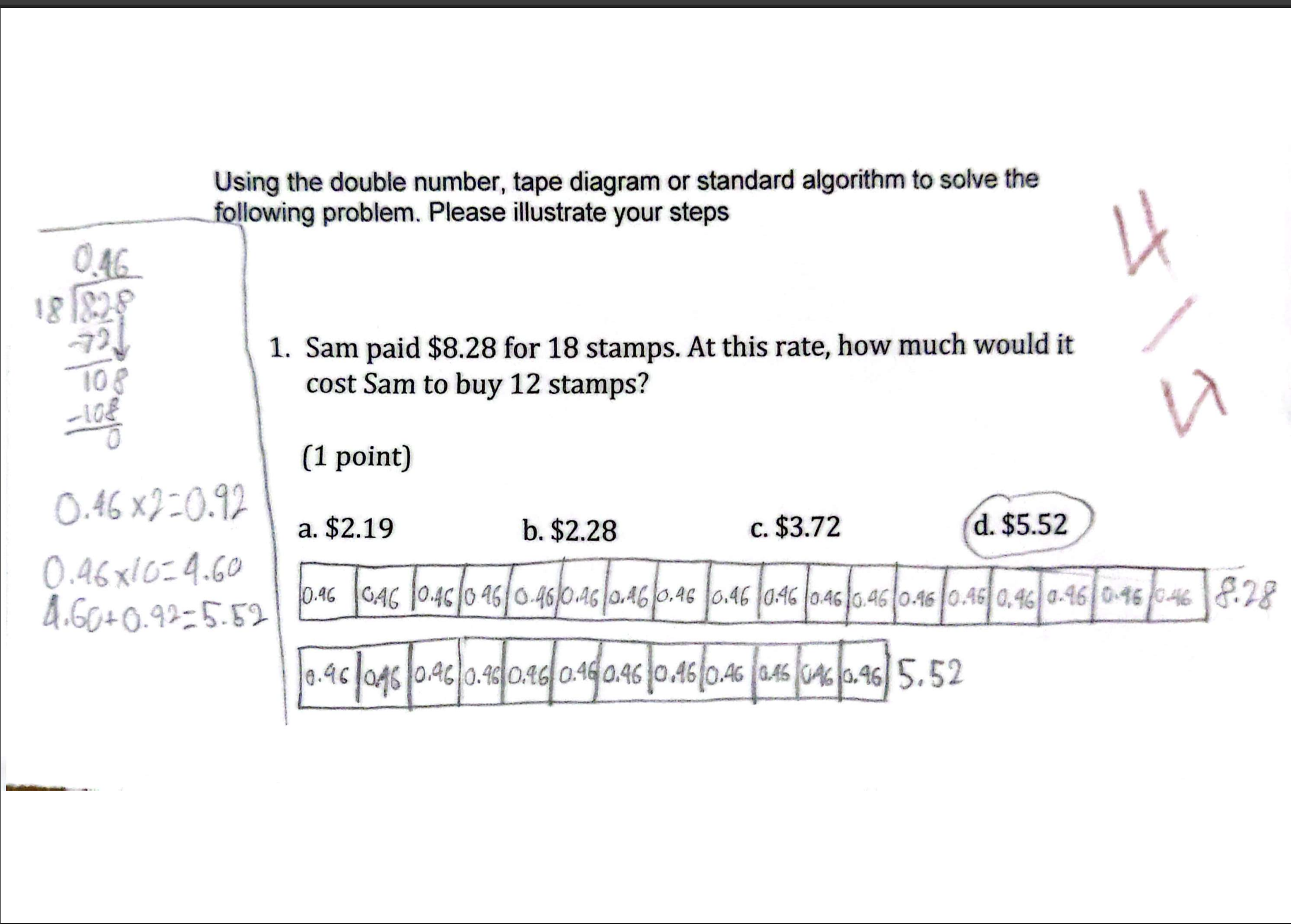
Scholar A — Visual Reasoner
Strategy: Tape Diagram + Unit Rate Construction
Strengths Demonstrated:
- Decomposed total cost into equal fractional units
- Built a tape diagram to visualize each stamp’s value
- Verified solution by re-assembling units and summing
- Developed numerical fluency through repeated addition
Outcome: Accurate reasoning and answer through conceptual modeling.
This learner thinks in pictures and patterns — math as structure.
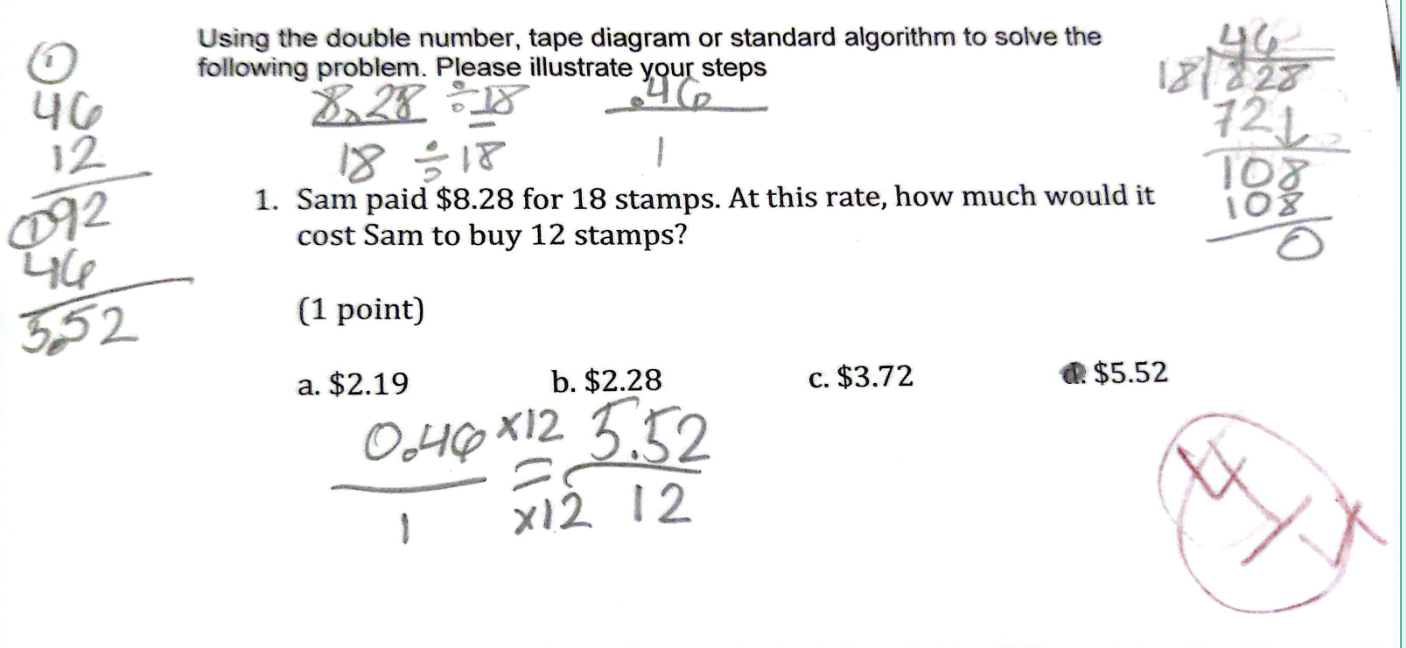
Scholar B — Algorithmic Thinker
Strategy: Unit Rate Division + Multiplication
Strengths Demonstrated:
- Used long division to determine cost per stamp
- Applied unit rate to target quantity
- Demonstrated procedural fluency and efficiency
- Checked understanding by annotating steps
Outcome: Accurate reasoning and answer using symbolic strategy.
This learner thinks in operations and logic — math as language.
C A S E S T U D Y
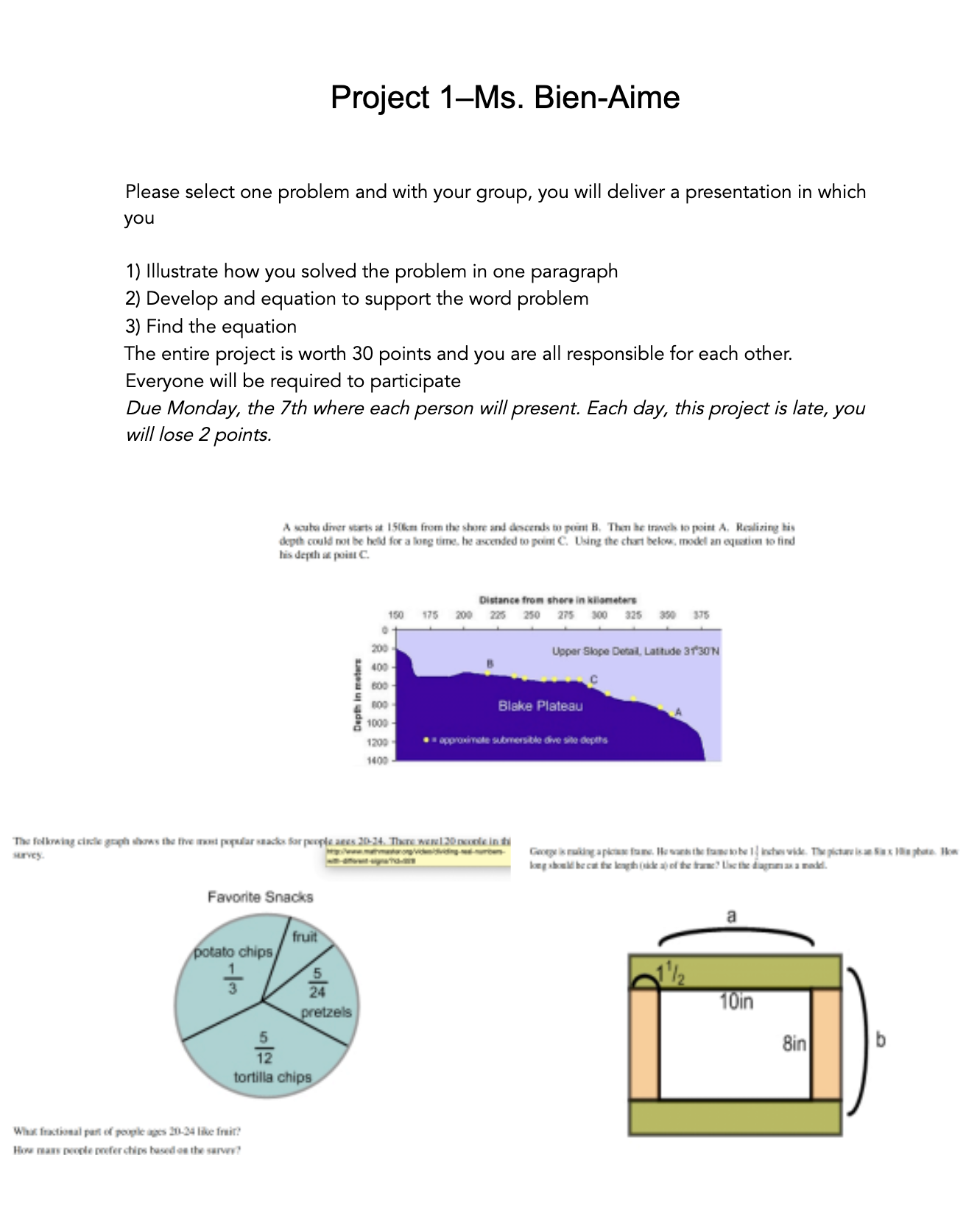
Students received authentic multi-step problems and were required to:
- Illustrate their mathematical thinking
- Build and solve equation
- Explain reasoning in complete academic sentences
- Present findings aloud
Resulting Student Work Example →(follow with screenshot)
Problem 1: Submersible Depth Graph
(Depth from shore → labeled points A–E on a graph)
Math Focus
Standard Area/Skills
Functions / Pre-Algebra
- Interpret graphs, understand relationships between variables
Algebraic Thinking
- Model data using tables/equations
Geometry
- Distances on coordinate plane
Number Sense
- Reason about scale and increments
Student Cognitive Work
Skill/Evidence
Data interpretation
- Reads axes and scale
Quantitative reasoning
- Depth increases vs distance
Pattern recognition
- Identifies trend in data
Mathematical modeling
- Writes equation/relationship
Academic language
Explains reasoning in writing
Students move beyond “plug in a formula.” They understand why numbers work — and they explain it clearly in writing.
Problem 2: Circle Graph — Favorite Snacks
Fractions: 1/3, 5/24, 5/12)
Math Focus
Student Cognitive Work
Skill/Evidence
Data interpretation
- Reads axes and scale
Quantitative reasoning
- Depth increases vs distance
Pattern recognition
- Identifies trend in data
Mathematical modeling
- Writes equation/relationship
Academic language
Explains reasoning in writing
Math Focus
Student Cognitive Work
Skill/Evidence
Word problem interpretation
- Meaning in context
Fraction operations
- Add unlike denominators
Percent Conversion
- Check reasonableness
Explanation writing
- Writes method + justification
Students move beyond “plug in a formula.” They understand why numbers work — and they explain it clearly in writing.
Problem 3: Picture Frame Dimensions
(Dimensions: 10in x 8in photo, frame width variable)
Math Focus
Standard Area/Skills
Geometry
- Area,
- perimeter, dimension relationships
Algebra
Express unknowns (a + 1.5, etc)
Measurement
Real-world dimensional reasoning
Student Cognitive Work
Skill/Evidence
Word problem interpretation
- Meaning in context
Fraction operations
- Add unlike denominators
Percent Conversion
- Check reasonableness
Explanation writing
- Writes method + justification
Scholar Portfolio Sample — Conceptual Fraction Reasoning
Scholars naturally gravitated toward the “snacks” problem because they recognized the context — but the task required advanced reasoning. They had to combine fraction operations, percent conversion, and written justification.
This shows a key principle at The Bien-Aimé Institute:
When learning feels familiar, students choose rigor — not avoid it.
Case Study: Scholar C — Fraction & Percent Reasoner
Strategy: Fraction Decomposition + Percent Verification
Strengths Demonstrated:
- Added multiple fractions with unlike denominators
- Converted fractional results into percentages to verify accuracy
- Interpreted circle graph as a whole (1 or 100%)
- Checked reasonableness mathematically (not guessing)
- Used both algorithmic + conceptual representations
- Explained method in complete academic sentences
Outcome:
Correct solution supported by dual-strategy reasoning (fraction + percent).
Scholar demonstrated metacognition by checking with a second method.
This learner blends computation with validation — math as truth-testing.
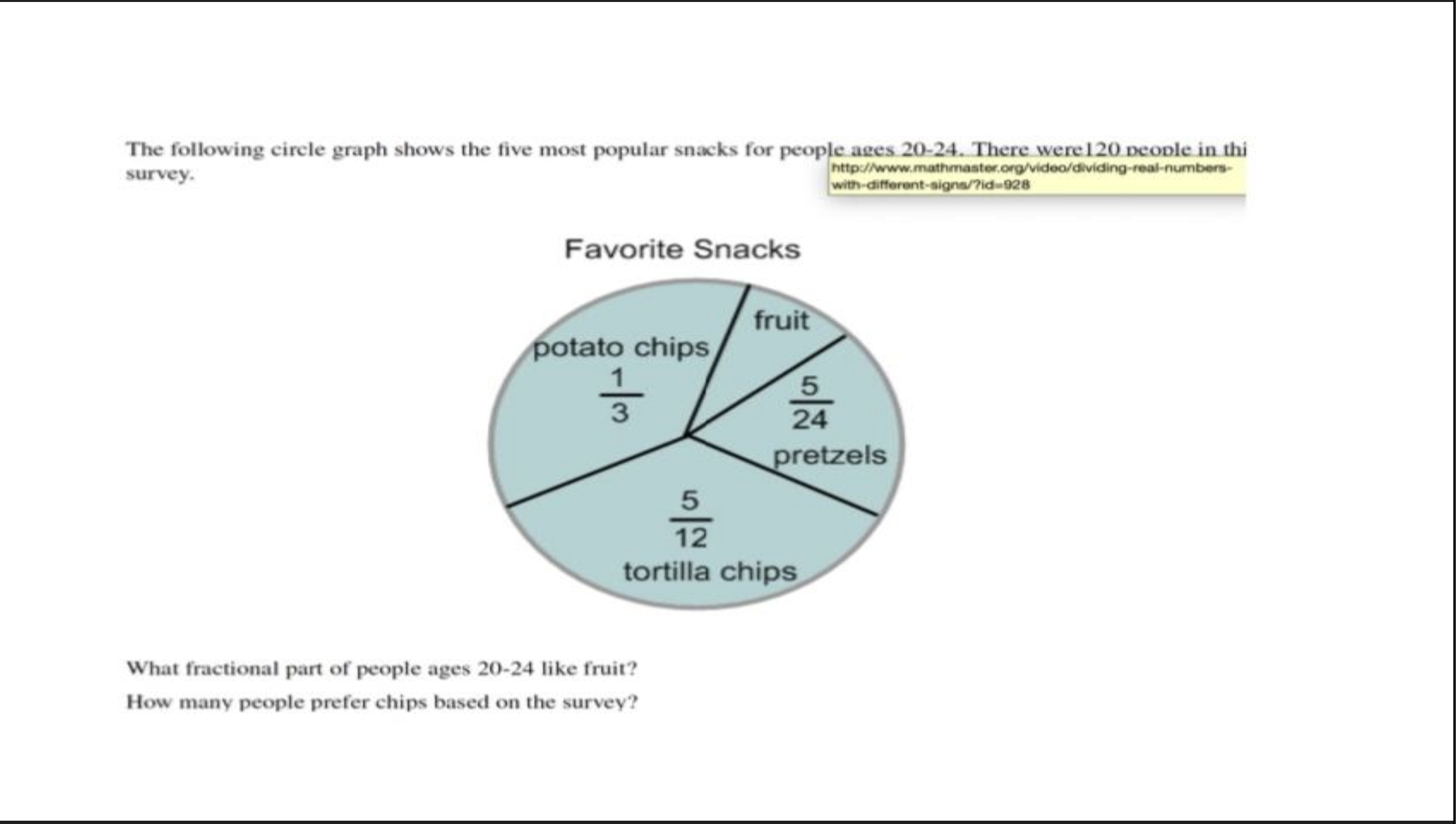
Scholar C applies fraction decomposition and percent verification to
confirm the total distribution.He uses two strategies —fractional reasoning
and percent checking — to ensure accuracy and clarity in her explanation.
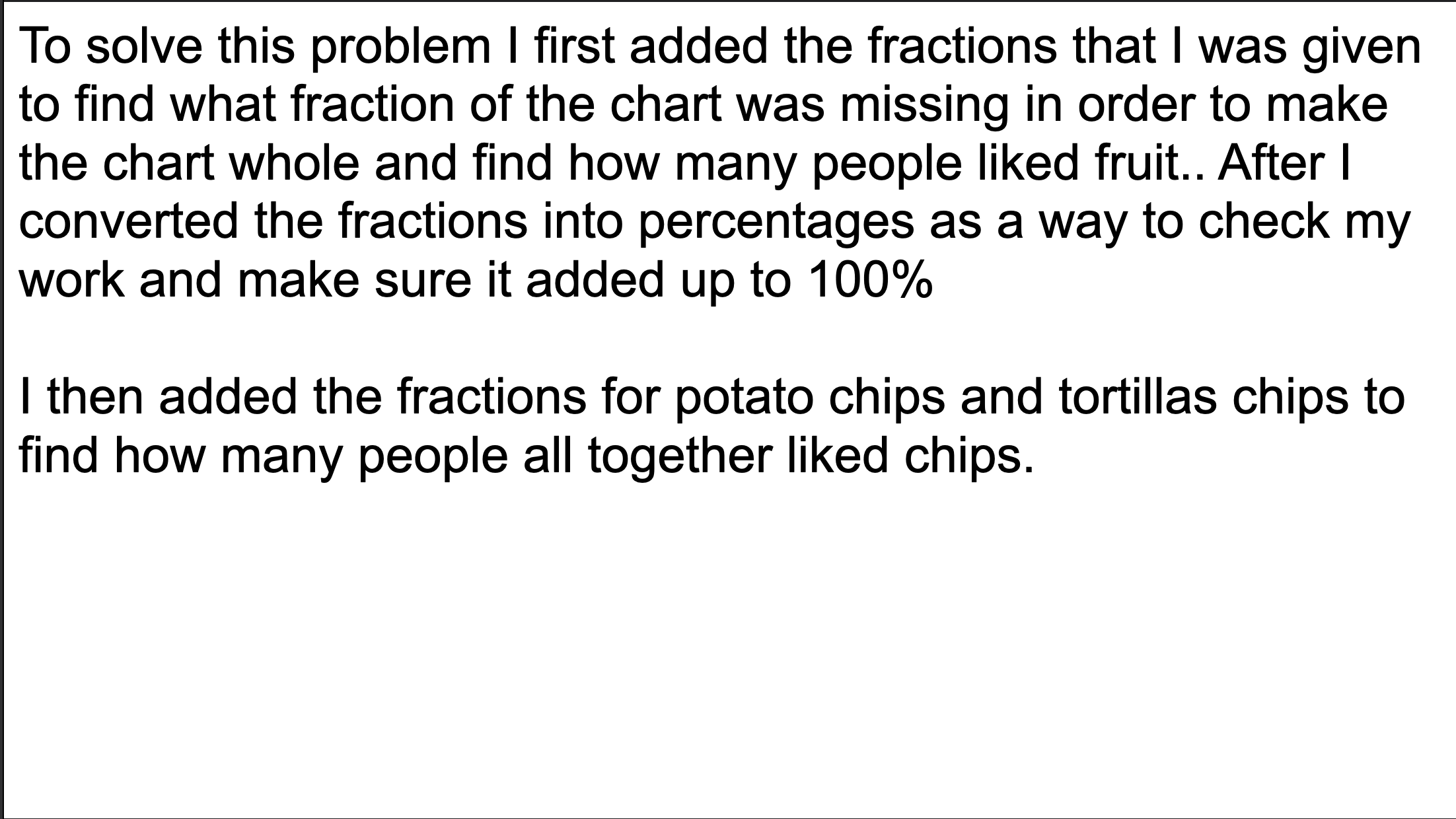
Adds fractions to represent categories, converts
to percent, and scales to the total population.
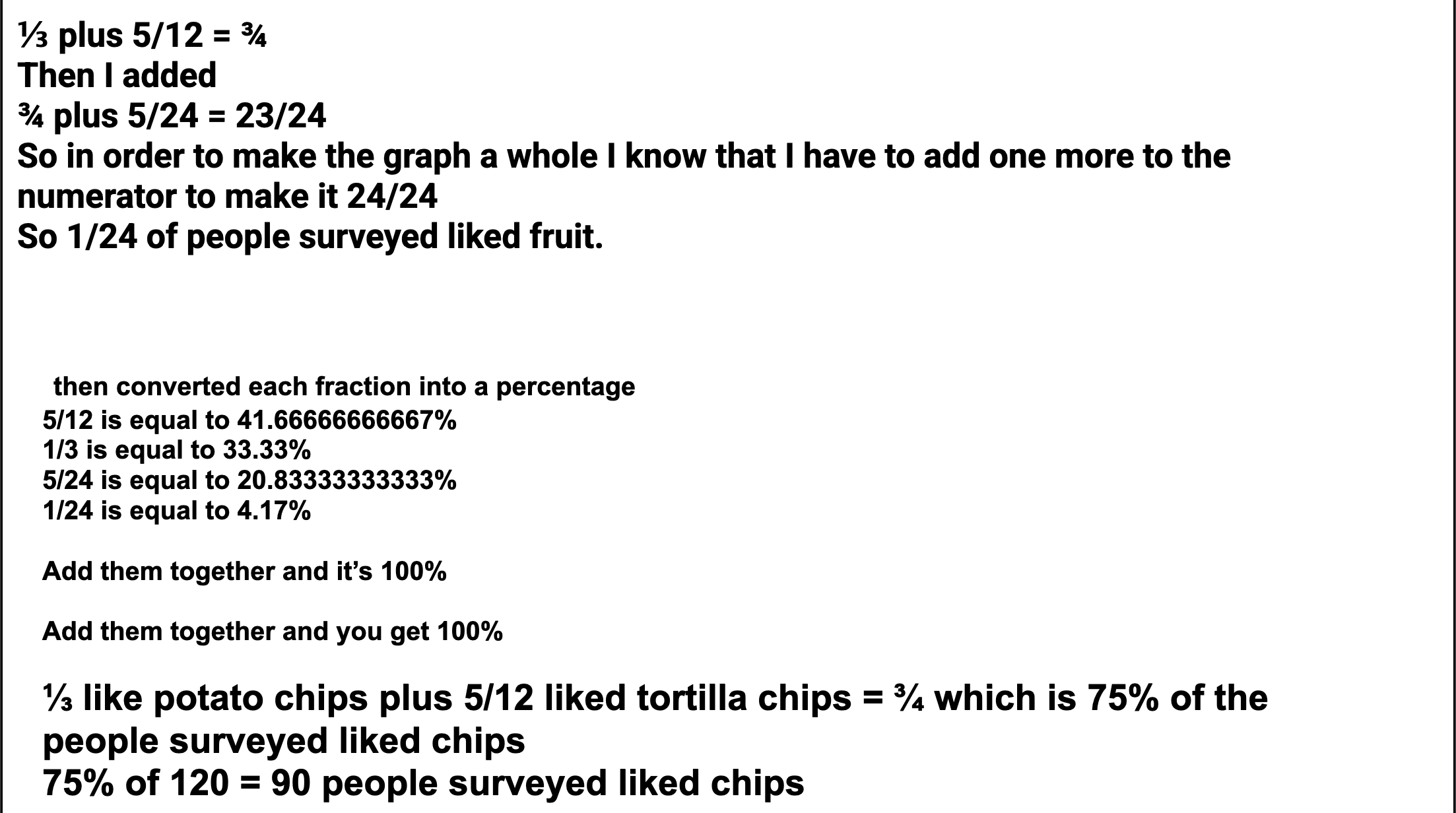
To validate his answer, he converts fractions to
percentages and compares totals, demonstrating
computation, verification, and precision.
Challenged with dignity. Trusted with complexity.
He didn’t just learn — he led...
She interprets the circle graph as a
whole and identifies fractional parts of the population.
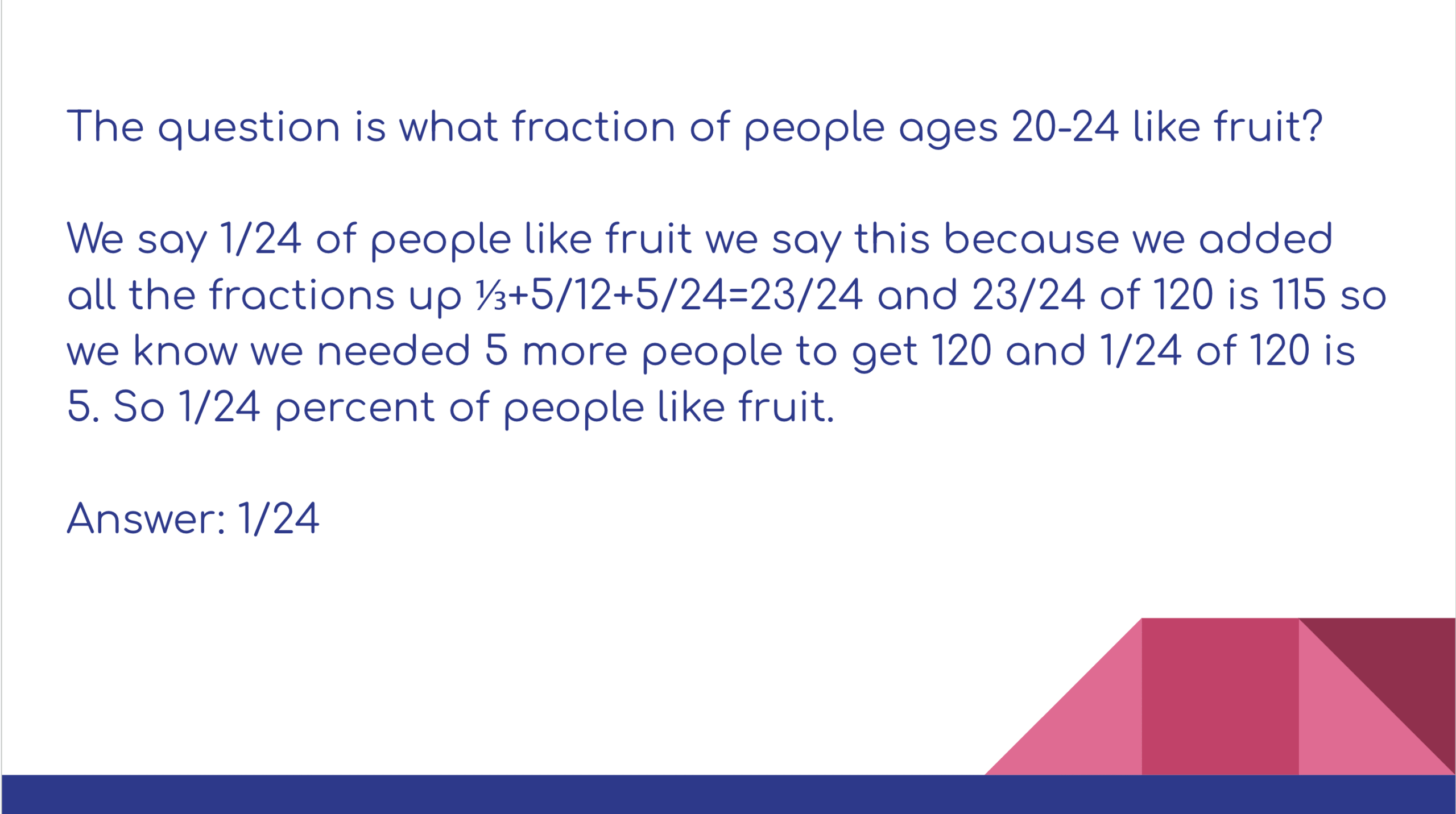
Adds fractions to represent categories, verifies totals,
and scales the fraction to the full population.
Uses fractional addition to
represent chip types, concludes
the combined fraction, and scales directly to the total number of people,
Not all brilliance looks the same.
Some scholars compute.
Some scholars reason.
Both are MATHEMATICIANS
Scholar D— Fraction Analyst & Conceptual Reasoner
Strategy: Fraction Composition → Whole/Part Reasoning → Unit Scaling
Strengths Demonstrated:
- Analyzed fractional parts to determine missing portion of the whole
- Used remainder reasoning (1 − sum of given fractions)
- Applied unit scaling: fractional part → full population count
- Explained logic clearly using everyday language, not formulas
- Demonstrated conceptual understanding over procedural calculation
Outcome:
Correct solution using fraction intuition + reasoning, not memorized steps.
This learner shows mathematical independence — thinking first, calculating second.
The Language of Mathematics
Examples of language as mathematics
Academic sentence
Tool intro sentence
IP disclaimer
The full Bien-Aimé Language-Mathematics™ Framework is taught through guided exploration — never templates, tricks, or charts.